Grey skies, cheap coffee, and a one-way ticket. Here’s why I left the north of England and never looked back.
If you’re not from the north of England, Wigan is a town in Greater Manchester that sits somewhere between “fine” and “forgotten.” It’s not without charm — there’s a warmth to the people that you don’t find everywhere — but as a place to build a creative career, raise your ambitions and feel genuinely inspired by your surroundings, it has significant limitations.
The weather alone is enough. Wigan averages around 140 days of rainfall a year. Not dramatic storms or romantic grey mist — just a persistent, low-level drizzle that settles into your mood without you noticing. You stop expecting sunshine. You stop planning weekends around being outside. You develop a relationship with waterproof jackets that no designer should ever have to develop.
Beyond the weather, there’s a sameness to life in a northern English town that’s hard to articulate but easy to feel. The same pubs, the same roads, the same conversations. For someone whose entire career depends on curiosity, fresh perspective and creative energy, it’s an environment that asks nothing of you — and gets exactly that in return.
I’d been working in digital design for over a decade before I started asking whether the place I was living in was quietly limiting what I was capable of.
It turned out it was.
The Cost of Living Argument
I’m going to get the practical stuff out of the way first because it matters enormously and nobody talks about it honestly enough.
In Wigan — or anywhere in the UK — a designer freelancing at a decent rate still has a significant portion of their income consumed before it does anything useful. Rent, bills, council tax, the cost of a social life, the cost of running a car, the cost of eating well. By the time you’ve covered the basics, the gap between income and financial breathing room is narrower than it should be for someone with genuine skills.
In Chiang Mai, that calculation reverses entirely.
I pay a fraction of what a comparable flat in Manchester would cost, for a nicer apartment with a pool, in a part of the city I actually enjoy living in. Eating out costs less than cooking at home in the UK. A coffee in a beautiful café with fast wifi and a mountain view costs about what you’d pay for a mediocre flat white at a chain in Manchester. A gym, a scooter, a social life, travel across Southeast Asia — all of this is accessible on a freelance income that would feel tight back home.
That financial headspace — the absence of the low-grade money anxiety that’s just baked into life in the UK — has an effect on your creative work that’s hard to overstate. You take more risks. You invest in personal projects. You don’t take on clients you shouldn’t take on because you need the money. You design from a position of genuine choice rather than necessity, and it shows in the work.
There’s Actually More To Do
This surprises people. Wigan is close to Manchester, which has plenty going on — but proximity isn’t the same as access, and “close to somewhere good” isn’t a great pitch for where you live.
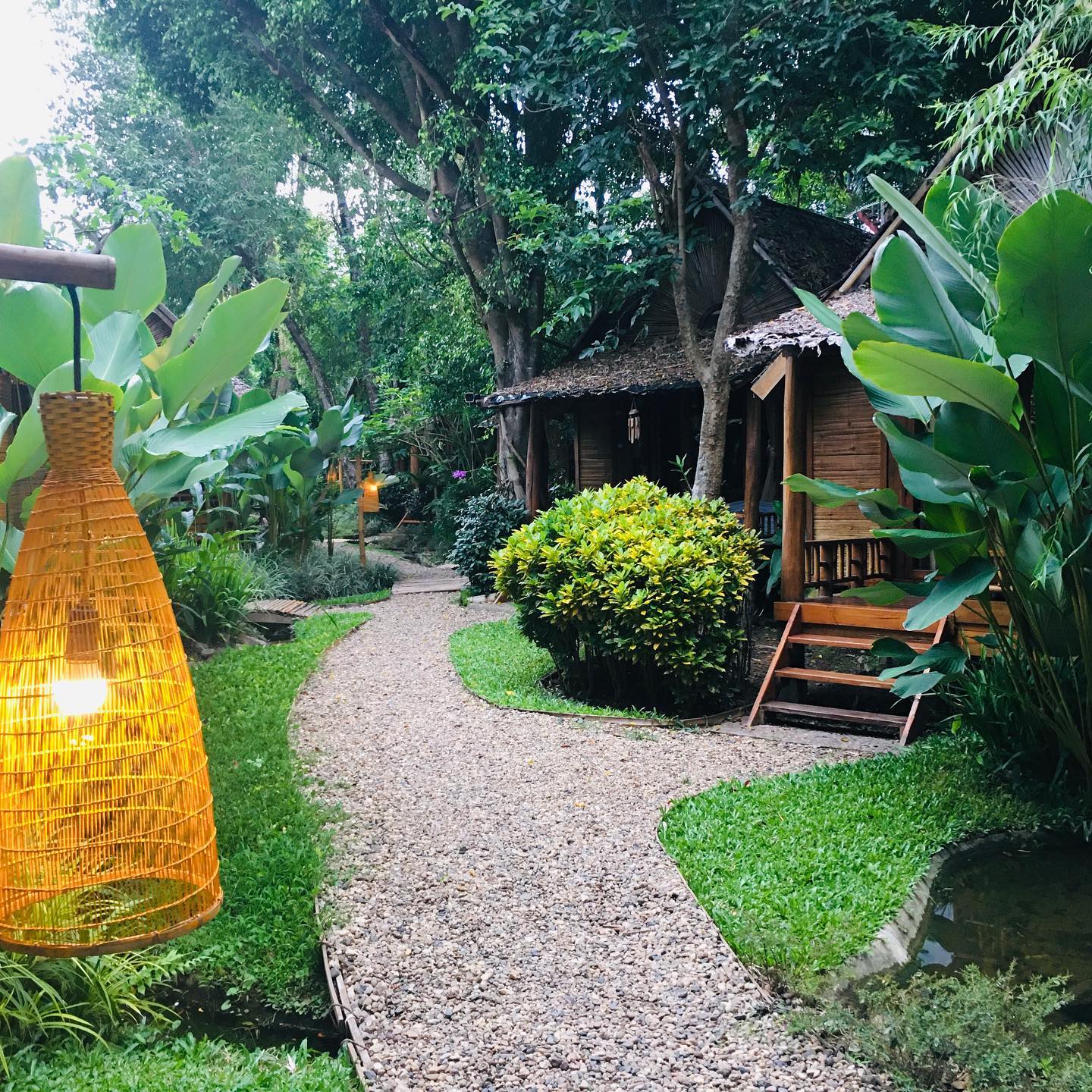
Chiang Mai has a density of experience that I genuinely wasn’t prepared for. Mountains twenty minutes from the city centre. Hundreds of ancient temples woven through the streets. A weekly night market that takes over entire neighbourhoods. World-class food at every price point. Rock climbing, cycling, kayaking, cooking classes, Muay Thai, yoga — all within easy reach, all year round. A moat-encircled old city that looks like nothing else in the world.
After years of “same pub, same weekend,” the sheer variety of what you can do and see on any given day is a constant low-level reminder that the world is large and interesting and worth being curious about. That attitude transfers directly into design work. I came to Chiang Mai and got my curiosity back.
The Arts Scene Nobody Talks About
Chiang Mai is genuinely one of the most vibrant arts cities in Southeast Asia and it’s significantly underrated by people who haven’t spent time here.
The city has a thriving contemporary arts scene built around the numerous galleries, studios and creative spaces concentrated around Nimman Road and the Old City. Local and international artists exhibit regularly. There are ceramics studios, textile workshops, illustration collectives, independent bookshops and design-led boutiques everywhere you look. The Saturday Walking Street and Sunday Night Market aren’t tourist traps — they’re showcases for genuinely skilled local makers and craftspeople.
There’s a visual culture here — in the temple architecture, the street art, the traditional craft, the food presentation, the way the city looks at golden hour — that feeds creative work in ways that grey urban England simply doesn’t. Inspiration isn’t something you have to go and look for. It’s ambient. It’s in the air.
The Digital Nomad Capital of the World
Chiang Mai has been ranked the number one digital nomad city in the world multiple times across multiple independent indices. That distinction isn’t just about cheap coffee and fast wifi — though both are abundant. It’s about the community of people that accumulates when you become the destination of choice for remote workers.
Walk into any co-working space in Nimman and you’ll find developers, designers, founders, writers, photographers, growth hackers, AI researchers and creative directors from every corner of the world. People who made the same calculation I did — that their skills were portable and their quality of life was worth optimising — and ended up in the same place.
That concentration of talent and ambition creates an ecosystem that genuinely accelerates your thinking. I’ve had conversations over street food in Chiang Mai that changed how I approach design problems. I’ve met developers who introduced me to tools and techniques I’d never have encountered working in isolation in a UK town. The informal knowledge transfer that happens in a community of motivated people working at the frontier of their fields is extraordinary — and you can’t manufacture it, you can only show up somewhere it already exists.
Was It The Right Call?
I’ve been in Chiang Mai for over eight years. The answer is so obviously yes that the question barely feels worth asking.
My work is better. My income goes further. My days are richer. My creative energy, which I was genuinely worried was running out in Wigan, turns out to have been rationed by environment rather than depleted by age.
The UK will always be home in some abstract sense — the accent, the football, the occasional craving for a proper Sunday roast. But home is also where you do your best thinking, where you feel most alive, where the surroundings ask something of you.
For me, that’s Chiang Mai. Probably always will be.